
The best local minds in wildland firefighting gathered today in Breckenridge for a summer fire preparedness meeting.
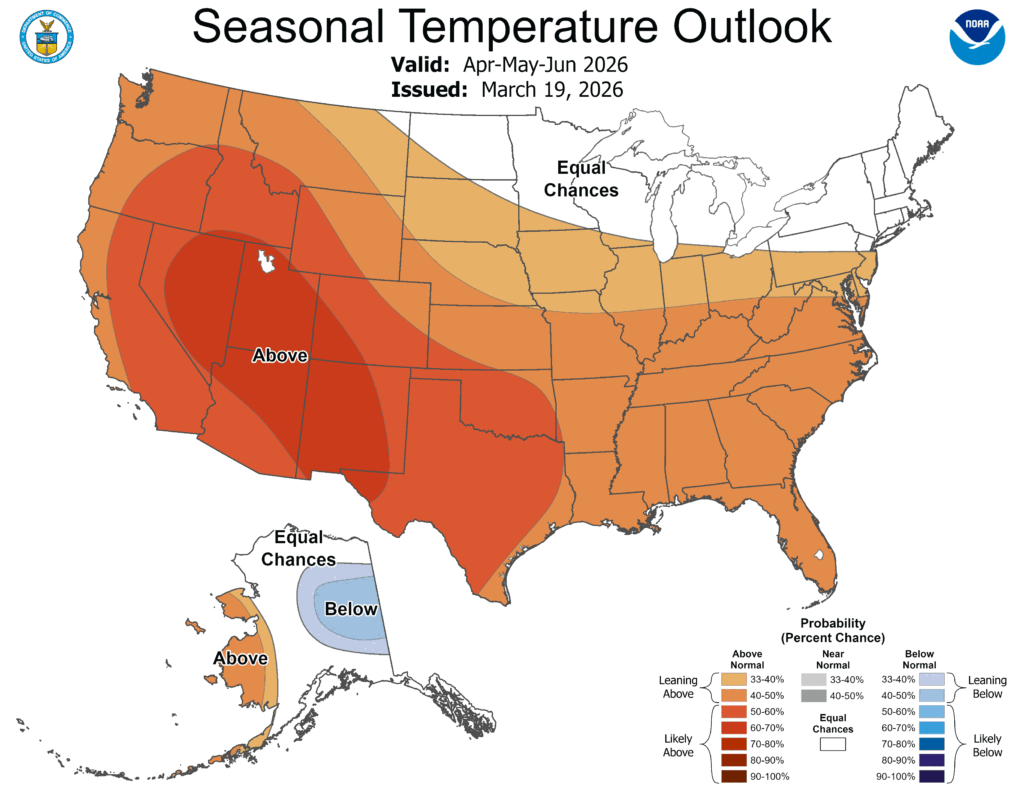
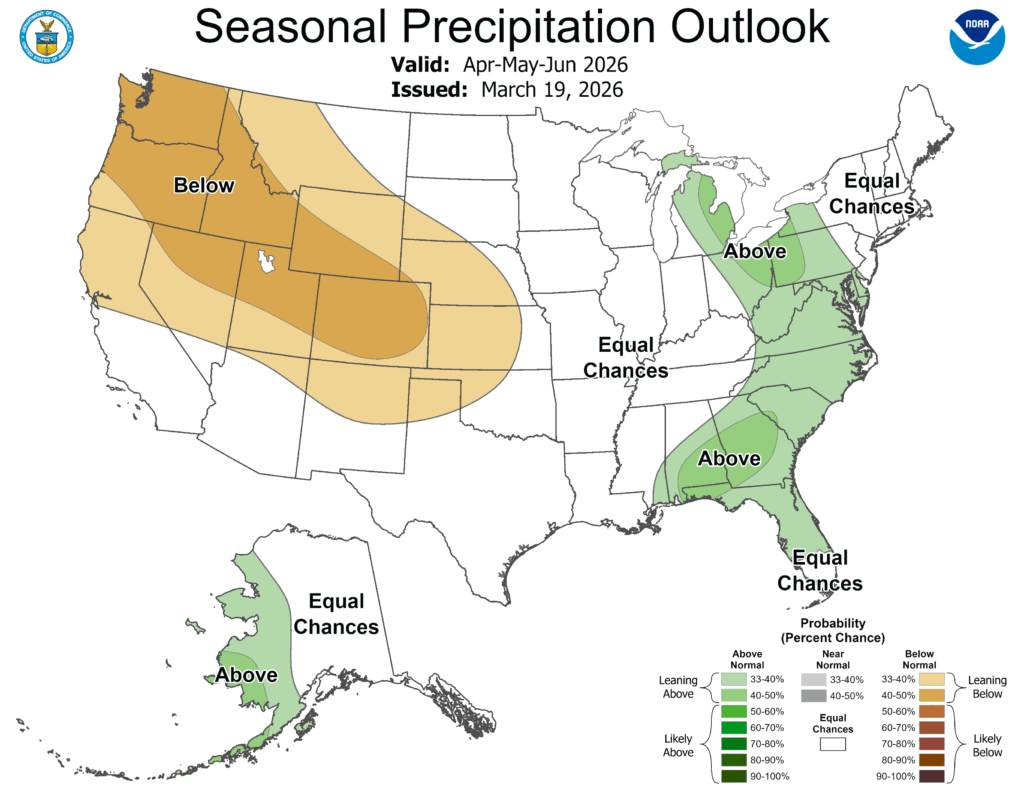
Like Summit County’s peak snowpack and Lake Dillon’s historic thaw, this meeting came weeks earlier than usual. The National Weather Service predicts above-average temperatures and below-average precipitation, now through June, and wildfire is already on everyone’s mind.
But Sam Massman, of the U.S. Forest Service, was looking on the bright side.
“Silver lining of this low-snow winter was we still had snow, but we didn’t get snowed out of pile burning,” Massman said to a packed house of fire chiefs, emergency managers, sheriff’s deputies and county commissioners. “We really kicked butt on that.”
Why pile burns matter
Massman’s coworker, Forest Service engine captain Dusty Calfee, said their agency and local fire departments took advantage of a miserable ski season. Their window for pile burning is typically only a few weeks between New Year’s Day and the next big snows of winter.
“We had something of a surge in that early season we knew we would get, and we kept chipping away,” Calfee said. “The end result of that was 700 acres of fuels reduction finally accomplished. A lot of that work is years in the making.”
Crews burned about 5,500 slash piles countywide, including Barton Gulch and Indiana Creek in Breck, west Blue River, and Lake Hill overlooking Lake Dillon, where the county has critical communications equipment. Elsewhere, the county and local fire departments worked with neighborhoods to finish mitigation, like Peabody Placer near the Highlands.
Summit has been clear-cutting dead and dying forests since the early 2000s, when the pine-beetle epidemic ravaged local forests, but a clear-cut isn’t finished until those piles of deadfall are burned. This leaves very little deadfall in that area – and fresh ground for new forest to grow. It also creates a fire break for firefighters to more easily attack cataclysmic fire.
“This is all part of a strategy that has been in place for a very long time, and that’s something our agency isn’t very good about voicing and telling that story,” Calfee said.
Summer to come
Most of the professionals at today’s meeting said their phones are already ringing off the hook with people worried about the upcoming fire season.
“It’s pretty obvious what we’re facing, and I think the attention we’re getting this early, which is abnormal, is appropriate,” county emergency manager Brian Boivard said. “A lot of what we’re doing now we do every year. We get paid to think about the most extreme risk and prepare for that. We live in a world of weather extremes now.”
Matt Benedict, with Red, White and Blue Fire, reminded the room that fire is unavoidable in a county where 80% of the land is Forest Service property, much of it carpeted in forest.
“We are going to have fires,” Benedict said. “That is part of our natural landscape. How we recover from those fires is the most important part.”
He continued, saying, “We have a robust group of wildland specialists who train our firefighters, and we well exceed national standards. That is something that sets us apart.”
Calfee, with the Forest Service, agreed. Local expertise goes a long way during a long summer, when federal resources are spread thin across the state and, potentially, the region.
“The Foerst Service is not the only game in town. The BLM is not the only game in town,” Calfee said. “The capacity that the sheriff’s office and these fire services have added, it has amplified in the past few years, and that is something I have not seen elsewhere in the country.”
Get ready now
The experts agreed: Homeowners are just as important as firefighters in a rural mountain town.
What can you do? Colorado State University has a few simple, low-cost tips for homeowners:
– Clear leaves and pine needles from gutters and roofs
– Prune tree branches within 10 feet of your home
– Store firewood 30 feet from your home
– Clear shrubs, grass and trees within 10 feet of outdoor propane storage
– Remove flammables from beneath deck storage