
Vail Pass is about to be construction-free for the first time since 2021.
After five years and more than $325 million, CDOT this summer is putting final touches on the I-70 west Vail Pass auxiliary lane project. Work begins April 20 and ends in October.
Scheduled for this summer is closing work on wildlife underpasses and avalanche fencing, along with new landscaping and final improvements on the rerouted recpath.
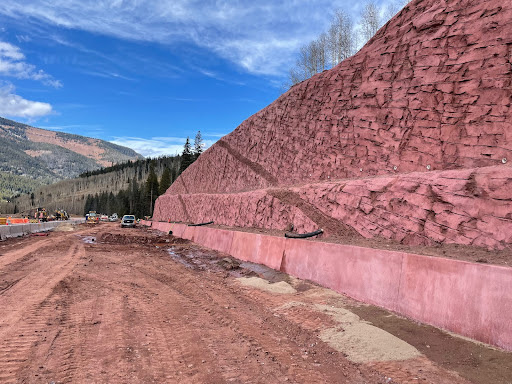
Maybe the most exciting for regular travelers is new pavement on westbound I-70 just west of Vail Pass summit, where the road has been chewed up by heavy machinery and bound up with concrete barriers.
“As we enter the final season of this critical project, our focus is on a safe and successful project completion,” CDOT Executive Director Shoshona Lew said in a statement. “From new bridges and pavement to wildlife crossings and avalanche and rockfall mitigation, every element of this work will make Vail Pass more resilient, reduce crashes and closures, and provide a more reliable and enjoyable trip for everyone traveling the I-70 mountain corridor.”
Colorado’s most dangerous road, safer
Since breaking ground, crews have rebuilt and expanded 10 miles of I-70 in the name of safety, adding a third lane for semi-trucks above the Narrows – the tight and steep corridor just west of the pass summit – and flattening a tight curve at the base of it.
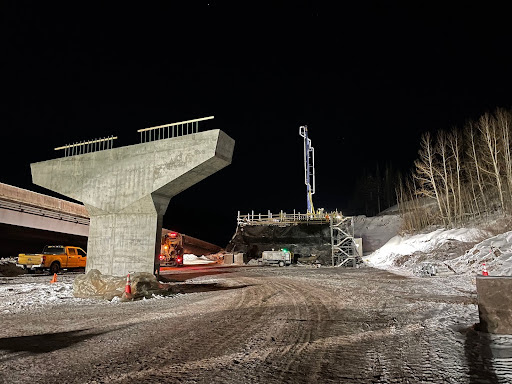
Colorado State Patrol calls Vail Pass the most dangerous road in the state for speed-related crashes. These improvements will dramatically reduce the crash rate there, CDOT says. It should also save money in the long run. For every hour I-70 is closed, the economic impact is $1 million, according to the state.
“We know too well that West Vail Pass is prone to closures due to weather events, as well as spin outs and crashes,” U.S. Rep. Joe Neguse said in 2020, when the project won nearly $61 million from the Feds. “Investments in safety and reliability in the I-70 corridor is essential to keep Coloradans safe and to continue to connect travelers east and west of the Continental Divide.”
This project has not been cheap. The price has more than doubled since it was first announced. Despite a growing budget, the scope was shrinking. Plans originally called for a third westbound auxiliary lane running the entire 10 miles from the base of the Narrows to the summit. During a site visit in fall 2025, CDOT told Krystal 93 that might happen in the future. A new bridge over Black Gore Creek, for example, is wide enough to fit a third lane.
2026 Traffic Impacts
But first, they must wrap up this summer. Here is more from CDOT:
Motorists should anticipate increased activity and changing traffic patterns as the project moves toward its final configuration.
- Beginning April 20, there is the possibility of daily single-lane closures along eastbound and westbound I-70 from MP 180 to 190.
- In May, I-70 traffic will be shifted to the south into a head-to-head, barrier-separated alignment in the new eastbound lanes to allow for roadway and wildlife underpass construction.
- From early to mid-June, rock-scaling activities will require traffic holds Monday through Thursday from 9:30 a.m. to 2:30 p.m. each day.
- The window for helicopter operations requiring traffic holds runs from mid-June to early September. Only a few total traffic hold days are anticipated during this time to move equipment in and out of the area.
- The traffic holds will last for about 20 minutes in both directions, but delays could be longer as the queues are cleared.
- Night work is possible at the start of the season and is expected to be more consistent beginning this summer through the project’s completion.