
Take it from Colorado’s mountain water experts – even two feet of sloppy, wet snow this week was too little, too late after months of historic heat.
“We just experienced the warmest winter on record,” Summit County water commissioner Troy Wineland says. “It is possible we could see another little blip (in river flows), but most folks are leaning toward our peak flows occurred a full two months earlier than average.”
Wineland and three other water experts yesterday joined a virtual roundtable with Altitude Realtors Association. The experts came from the Arkansas, South Platte and Yampa river basins, where they are seeing the same trend of low water, low snow and below average flows.
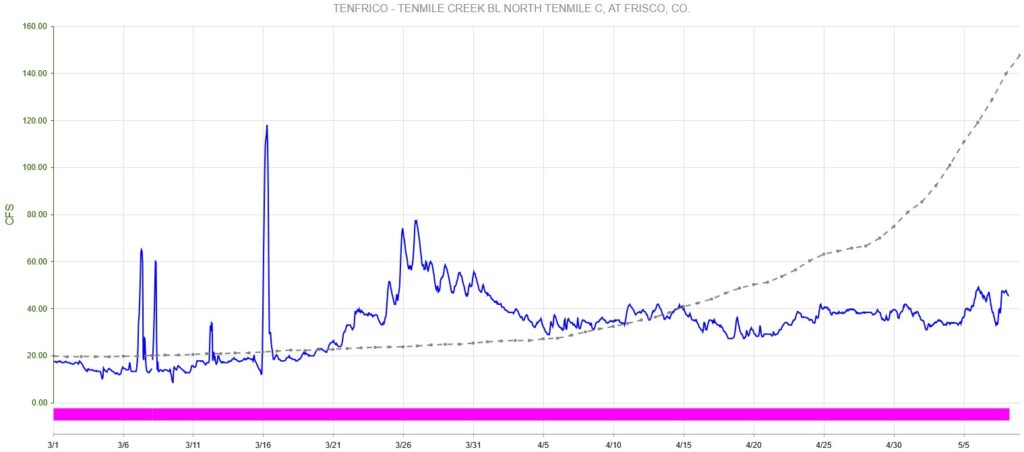
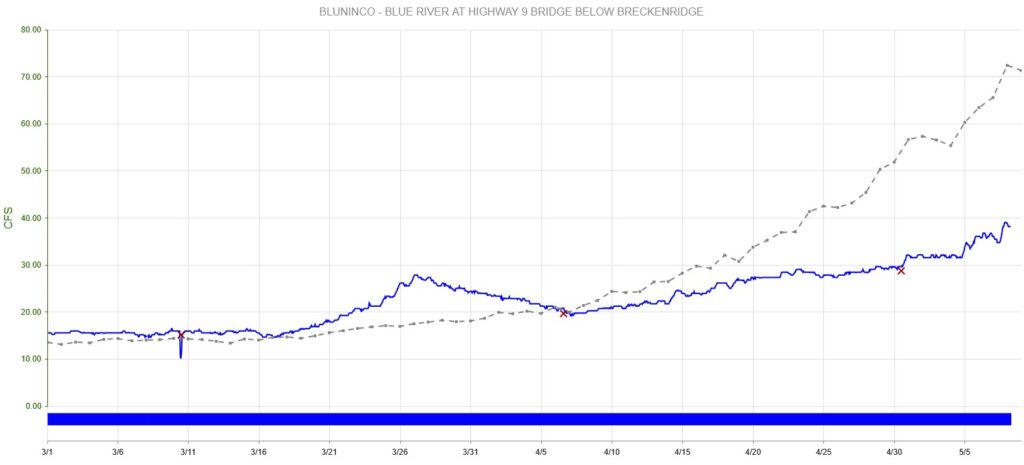
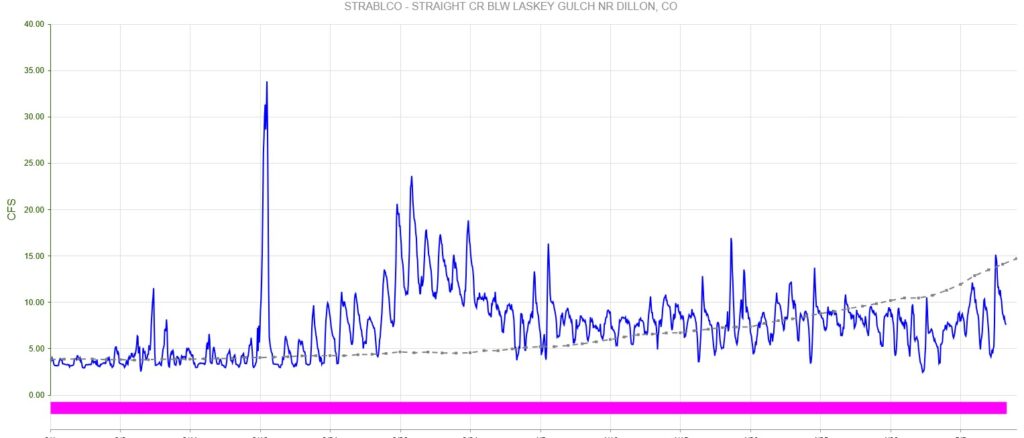
Wineland gave data from river sites in Summit, at the headwaters of the Colorado River, which waters tens of millions of homes downriver. He said this sobering data reflects what is happening on rivers across the state:
- Snowpack peaked one month earlier than average
- Average SWE (snow water equivalent) was 8-9 inches lower than median
- Rivers peaked two months earlier than average at 15-40% of average
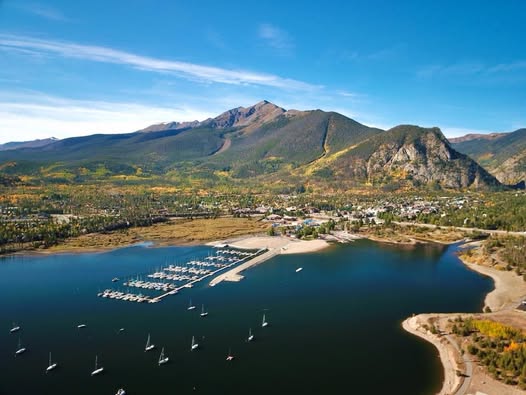
- Dillon Reservoir will peak under 100% (Photo Credit : Dillon Reservoir – Jared Clauer)
- Green Mountain Reservoir will peak under 34%
- Green Mountain Reservoir will peak under 34%
As Wineland predicted, three major rivers in Summit saw small bumps today, when snow from Wednesday’s storm started melting. Rivers might keep rising slowly this weekend with temperatures in the 60s. By next week, when temperatures could reach the 70s, Summit could see the same brown peaks we saw most of winter.
“I would encourage everyone to acknowledge and recognize and accept that we live in a semi-arid desert,” Wineland says. “We’ve lost touch with that. We really need to get aback to that understanding and realization, and live within our means.”
Water rights vs. reality
When rivers run dry, reservoirs run dry, and this premature peak underscores a chronic problem with water rights: For over a century there has been more water on paper than there is in modern rivers.
“Though we are the largest basin by area, we have the smallest basin by supply,” Arkansas River division engineer Rachel Zancanella says. “In a good year 800,000 acre-feet total is our yield. In a dry year, it’s around 300,000. This year we’re looking at less than 250,000.”
An acre-foot of water is about equal to a football field of water, one foot deep. Lake Dillon fits 257,304 acre-feet when full. Lake Powell fits 24.3 million acre-feet, but today is sitting at less than one-quarter of capacity.
Zancanella continued, saying, “The Arkansas Basin has been fully over-appropriated … since the late 1880s.” This means the maximum amount of water is already claimed, and promised, whether it is there or not.
No water, no power
Low flows also impact hydroelectric power, from Lake Powell in Arizona to the Mt. Elbert Power Plant at Twin Lakes near Leadville. The two turbines on Twin Lakes have been shut down for mechanical issues in recent years. This year, managers are worried about having enough water to feed the turbines.
“We hear a lot about the power pool at Powell, but we are below the power pool on most of these other reservoirs if there are minimum flows,” she says, giving the example of another threatened power plant below Pueblo Reservoir. “No water, no power is the combination there.”
The Pueblo plant, for example, might be turned off for weeks at a time, and switched on manually only when there is enough water. This could impact electricity for the city.
Watering limits
For most other cities and towns, thirsty rivers will mean thirsty lawns, golf courses and grassy medians, and water districts are doing what they can to limit water use now before dry days tomorrow.
Denver Water adopted watering restrictions in April. So did the city of Aurora and others on the Front Range. Every town in Summit has watering limits, including Frisco, where the marina will not be open for private powerboats or sailboats.
“Do you want to have a green lawn, or do you want to have water for the rivers and water for the fish, and the terrestrial wildlife that depends on those streams and rivers?” Wineland says. “Those fish are already going to be stressed.”