
Are High Country roads deadlier than ever for people on foot and pedal?
That is the question CDOT hopes to answer as it tracks an alarming spike in non-motorized injuries and fatalities for Region 3, which includes Summit and Eagle counties.
The past three years combined have been the worst in recent history with near-record deaths and crashes involving people who are walking, biking or otherwise not protected from vehicles.
CDOT shared a ton of information with Summit County officials at a joint meeting yesterday, including two graphs with 10 years of crash trends. It shows non-motorized accidents spiking in 2019 before dropping significantly during the pandemic. They have been rising steadily ever since, peaking with 12 fatalities in 2022 and a total of 134 incidents between 2023 and 2025 – a rate of one every eight days.
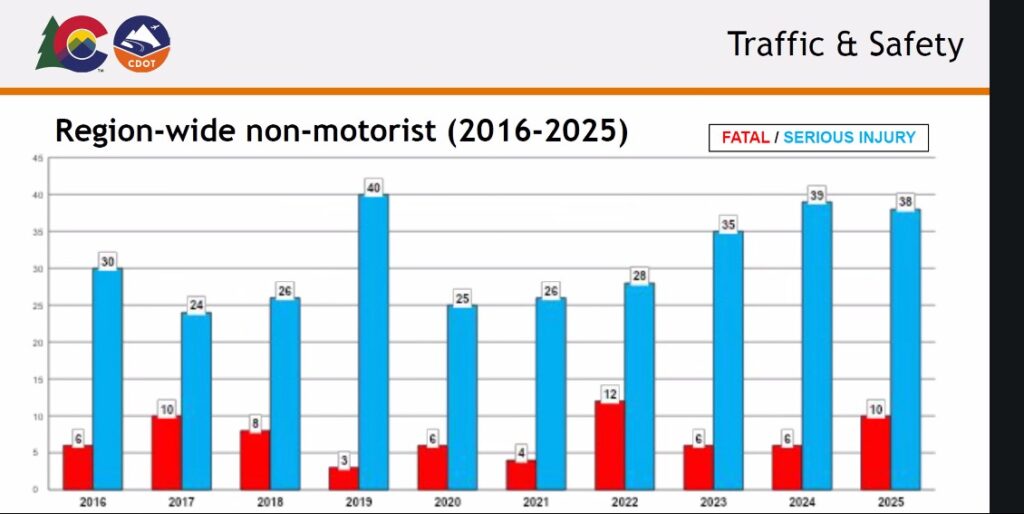
Officials did not spend much time talking about the data, but Region 3 manager Jason Smith pledged to find out what is happening, saying, “We don’t know why, but we are looking into it, working with local agencies to understand the situation better. We are finding money for vulnerable users to work on safety there.”
Summit and neighboring counties are not alone. Colorado State Patrol reports bicycle vs. vehicle deaths statewide have spiked 34% since 2016. Troopers believe speed is often to blame, especially in cities and on neighborhood streets.
The average risk of death for a pedestrian reaches 25% at 32 miles per hour and triples to 75% at 50 miles per hour, according to research cited by state patrol. Most main roads in Summit, like Highway 9 and U.S. Highway 6, have speed limits near 50 miles per hour.
CDOT meanwhile is encouraged by a slow but steady decline in motorized vehicle injuries, sharing another graph that shows a 9% drop last year.
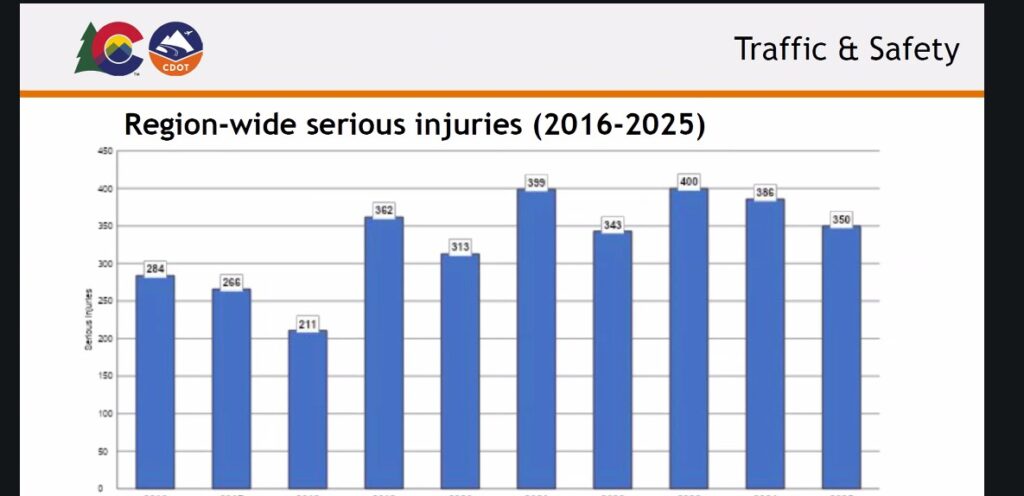
Most local CDOT projects these days begin with safety. The Exit 203 rebuild, for example, will move exit ramps and roundabouts to prevent backups at the exit and make the interchange easier for pedestrians to navigate.